QR Ph, Direct Debit PH, and the ₱500,000 Limit: A Straight Answer for Operators and SMEs
BSP's own FAQ says the QR Ph rebrand changed nothing technical. Most of the coverage said the opposite. Here is what actually changed, and what it means depending on whether you collect payments or build the rails.

On 29 July 2026, BSP and PPMI launched three payment capabilities and clarified a fourth thing that had already happened. Coverage was immediate and near-identical across a dozen outlets, and most of it led with the largest number in the release.
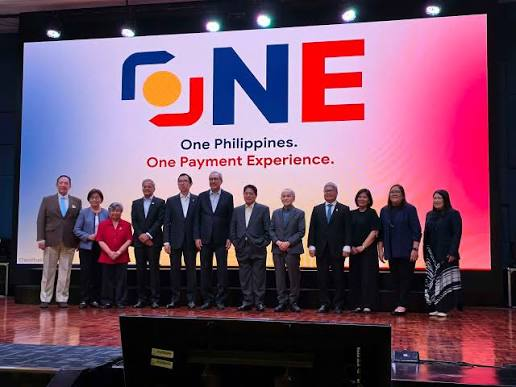
Here is what changed, what is genuinely usable today, and what it means depending on whether you are a merchant collecting payments or an operator building the infrastructure underneath them.
| What changed | Status today | Who it moves |
|---|---|---|
| QR Ph / InstaPay QR naming | Formalized. No technical change. | Merchants with QR signage; anyone doing customer education |
| Direct Debit PH | Launched. Four pilot banks live, ~16 in development. Financial institutions only. | Any business with recurring revenue |
| InstaPay Cash-In | Launched at eight institutions. | Consumers mostly; low operator impact |
| InstaPay for Business, ₱500,000 cap | Scheme rule live. Available at five named institutions. | B2B, wholesale, payroll, marketplace payouts |
The QR rebrand changed nothing technical, and BSP says so plainly
BSP's own FAQ on the rebranding contains this sentence: "This rebranding does not change the technical standards, operating rules, or underlying infrastructure of QR Ph."
That is worth quoting directly, because a lot of the commentary in the days after the launch described a new unified QR standard. The opposite happened. BSP formalized a separation it had already made functionally as early as 2024.
The split is simple and it matters at the counter:
- QR Ph now refers exclusively to person-to-merchant payments. The merchant absorbs the fee.
- InstaPay QR refers to person-to-person transfers. Fees vary by receiving institution.
The reason for the split was a real problem. Customers were scanning personal transfer codes at merchants and getting charged fees they did not expect, and merchants were accepting payments into personal accounts with no merchant-side record. Two names make the distinction visible before the money moves.
None of this is new regulation. QR Ph comes from BSP Circular No. 1055 (17 October 2019) under the National Payment Systems Act, and mandatory adoption — including the shutdown of proprietary QR codes by 1 July 2023 — came through Memorandum M-2023-005 (15 February 2023).
If you are an SME: check which code is displayed at your counter and which account it points to. If customers are paying you through a personal transfer code, you are outside the merchant framework — no merchant-side reconciliation, and the fee behaviour is different from what you probably assume.
If you are an operator: the customer education burden is yours and it is unfunded. Banks started publishing plain-language explainers within days; China Bank posted a straightforward "which code is which" guide. Payment providers largely did not. Merchants will ask, and the answer needs to be consistent across your support, your docs, and your onboarding.
Direct Debit PH is the largest change, and it is not open to everyone
Direct Debit PH lets a customer pre-authorize a business to collect from their bank or e-money account on scheduled dates. Mandate first, then automatic collection. Utilities, subscriptions, loan amortizations, insurance premiums, association dues.
It is genuinely new for this market. Automatic debit arrangements previously worked within a single bank. This one is interoperable — a biller at one institution can collect from a payer at another, and it settles through the national infrastructure. The industry framing has been consistent: it replaces the post-dated cheque.
Cost structure, as announced: free for consumers, the biller pays. The biller-side price is not published anywhere I can find, which is a meaningful gap for anyone trying to model this against card economics on recurring charges.
Availability is the part to be careful about. Four banks piloted it — BDO, BPI, RCBC, and China Bank — with roughly sixteen more in development and a stated ambition of reaching the full PESONet membership within one to two years.
The constraint that matters most is structural: participation is limited to financial institutions. PPMI's eligibility criteria require a BSP-supervised institution with an EPFS licence, signatory status to the Direct Debit ACH Agreement, PPMI membership, and either direct participation with a PhilPaSS Plus settlement account or a sponsoring participant. PPMI's own explainer document for this rail is written for a financial-institution audience, and it says so in the filename.
If you are an SME with recurring revenue: this is the most consequential item on the list for you, and you probably cannot access it directly yet. Your route is your bank, if your bank is live. Ask three questions: are you a Direct Debit PH participant, what does collection cost me per mandate, and what is the mandate setup experience for my customer. If your bank is not live, the honest answer is that you wait.
If you are an operator: the unanswered question in this entire launch is whether a payment service provider can sponsor SME access to Direct Debit mandates, or whether this is enterprise-with-a-creditor-bank-relationship only for the next two years. Nobody has published an answer. Nobody has publicly asked. If the answer is no, then the businesses in this market with the most recurring revenue — SaaS, gaming, streaming, membership, education — are excluded from a rail built for recurring collection, because the official biller framing is utilities, telcos, insurance, and property.
The ₱500,000 headline is a scheme rule, not a market reality
BSP's FAQ on InstaPay for Business establishes the terms clearly: a per-transaction ceiling of ₱500,000 for business and corporate accounts, no limit on the number of transactions and no aggregate daily value cap at scheme level, available 24/7.
The same FAQ contains the qualifier that most coverage dropped: originating financial institutions may impose their own lower limits, and may set their own fees.
At launch, the facility was live at five named institutions: PNB, RCBC, GoTyme Bank, Wise Pilipinas, and DCPay. No public roster of participating institutions exists, so the share of total InstaPay membership this represents is not something I can state accurately — and neither can anyone else writing about it. The steering committee's stated expectation is that most PPMI members are on it by 2027.
One more detail with real commercial weight. InstaPay for Business sits outside the pricing regime that took consumer transfer fees to zero. Circular 1238 brought down fees on domestic person-to-person transfers, and banks moved quickly past it — several zeroized P2P transfers entirely in July 2026. But BSP's accompanying memorandum states that the prescribed pricing mechanism covers person-to-person transfers only and does not extend to transactions involving corporate clients or merchants.
So the consumer side of the market is converging on free while the business side stays commercially priced. Anyone forecasting off "transfers are free now" is forecasting the wrong half of the market.
If you are an SME: the ceiling only helps if your bank has enabled it, and your bank may set a lower limit and its own fee. Ask before you plan a payment run around it. Where it is live, the arithmetic is straightforward — a ₱500,000 payment that previously fragmented into ten ₱50,000 transfers becomes one instruction, in real time, instead of a batch window.
If you are an operator: fixed per-transaction pricing captures none of a ceiling increase, which is a good position to hold when limits rise and a bad one to hold if per-transaction economics are your only revenue line. The absence of a fee cap on business transfers is also the clearest remaining margin surface in domestic transfers.
InstaPay Cash-In
The smallest of the three. One user requests funds, the other approves and sends from their bank or e-wallet app. Live at eight institutions, including BPI, China Bank, UnionBank, GCash, GoTyme, ShopeePay, MariBank, and AllBank. It retains the standard ₱50,000 person-to-person ceiling — the ₱500,000 figure does not apply here.
Adoption is already substantial: 9.2 million transactions worth ₱36.39 billion as of June 2026.
For most operators this changes little. For consumer-facing products it removes a small amount of friction from a common flow.
What nobody has published yet
Four questions matter and none has a public answer as of 3 August 2026.
When does merchant signage have to be updated?
BSP's rebranding FAQ defers the compliance deadline to "final implementation guidelines." Those guidelines are not published. Every merchant displaying a QR standee has an obligation with no date attached to it.
What does Direct Debit PH cost a biller?
No published figure, from BSP, PPMI, or any participating bank.
Can a payment provider sponsor SME access to Direct Debit mandates?
Unaddressed in every document and every article.
Can a payment provider sponsor SME access to Direct Debit mandates?
Unaddressed in every document and every article.
Which institutions actually offer InstaPay for Business?
No live roster exists.
If you need any of these answered, the source is PPMI or your own bank. It is a phone call, and as far as I can tell almost nobody has made it.
What to do this month
SMEs. Verify which QR code is at your counter and which account it settles into. Ask your bank whether it is live on Direct Debit PH and InstaPay for Business, and what each costs you. Do not build a collection process around the ₱500,000 ceiling until you have confirmed your own bank's limit and fee.
Operators. Get your merchant-facing terminology consistent across support, documentation, and onboarding before customers ask. Establish whether sponsorship into Direct Debit PH is available to you, because the answer determines whether your recurring-billing customers have a path onto a card-free rail or are stuck on cards while a bank-rail alternative exists. And separate your pricing thinking for the consumer and business sides of transfers — the regulatory treatment is now different.
The infrastructure phase of Philippine digital payments is finishing. Digital sat at 57.4% of retail payment volume in 2024 against a 60–70% target for 2028, and BSP has been explicit that the remaining distance depends on trust and behaviour rather than new rails. Trust is built by whoever explains the thing accurately. On this launch, that job is still open.
Author's note: I run marketing and communications at PayMongo, a Philippine payment and financial infrastructure provider. This piece names competitors, contains no PayMongo product pitch, and is written from primary sources — BSP FAQs and issuances, PPMI documents, and named press reporting. Where a fact could not be verified I have said so rather than filled the gap. This is general information, not advice; confirm specifics with your own provider or bank.