The Ghost in the Ledger: The Philippines' Flood Money, One Year Later
A second look at the ₱556 billion question: what changed when the accountability we asked for actually arrived.

Last year, Oblique asked a plain question: the Philippines had spent ₱556 billion on flood control since 2022, roughly ₱1 billion a day, and the floods kept coming anyway. The piece ended on a line that read, at the time, like a normal editorial flourish: the time for accountability is now. Twelve months later, accountability arrived. It arrived as a president's confession, a couple's plea for immunity, a commission with subpoena power, a march that filled two parks, and a docket of criminal cases that now runs to senators, a cabinet secretary, and a contractor family. It has not yet arrived, in any form a court has certified, for the man most witnesses name as the person who ran the table.
That gap, between the size of the confession and the size of the consequence, is the story now.
The confession
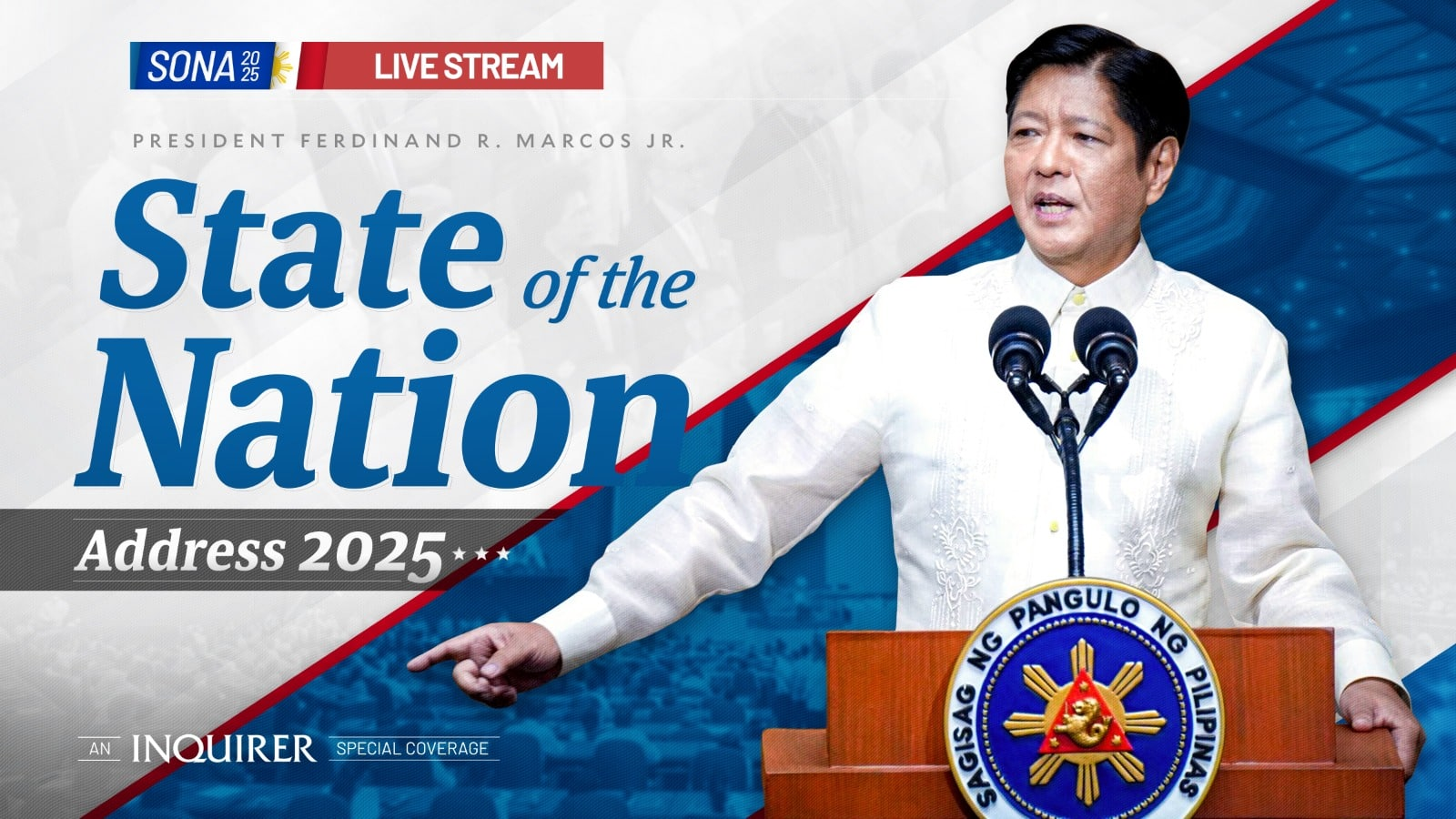
On July 28, 2025, President Ferdinand Marcos Jr. used his State of the Nation Address to say what auditors had been implying for years: that flood control projects were "failures... or existing just in the imagination," and that officials had been collecting "kickbacks, initiative, errata, SOP... for the boys." He told them, in Filipino, mahiya naman kayo (shame on you), and ordered his own Department of Public Works and Highways (DPWH) to publish three years of project records (Inquirer). It was not a spontaneous outburst. The Commission on Audit had already ordered a fraud audit of Bulacan flood projects. Senator Panfilo Lacson had already floated a figure: half of ₱2 trillion spent over fifteen years, potentially lost to graft. And Marcos had already vetoed ₱16.7 billion of the 2025 flood budget before he stood at the podium (Wikipedia).
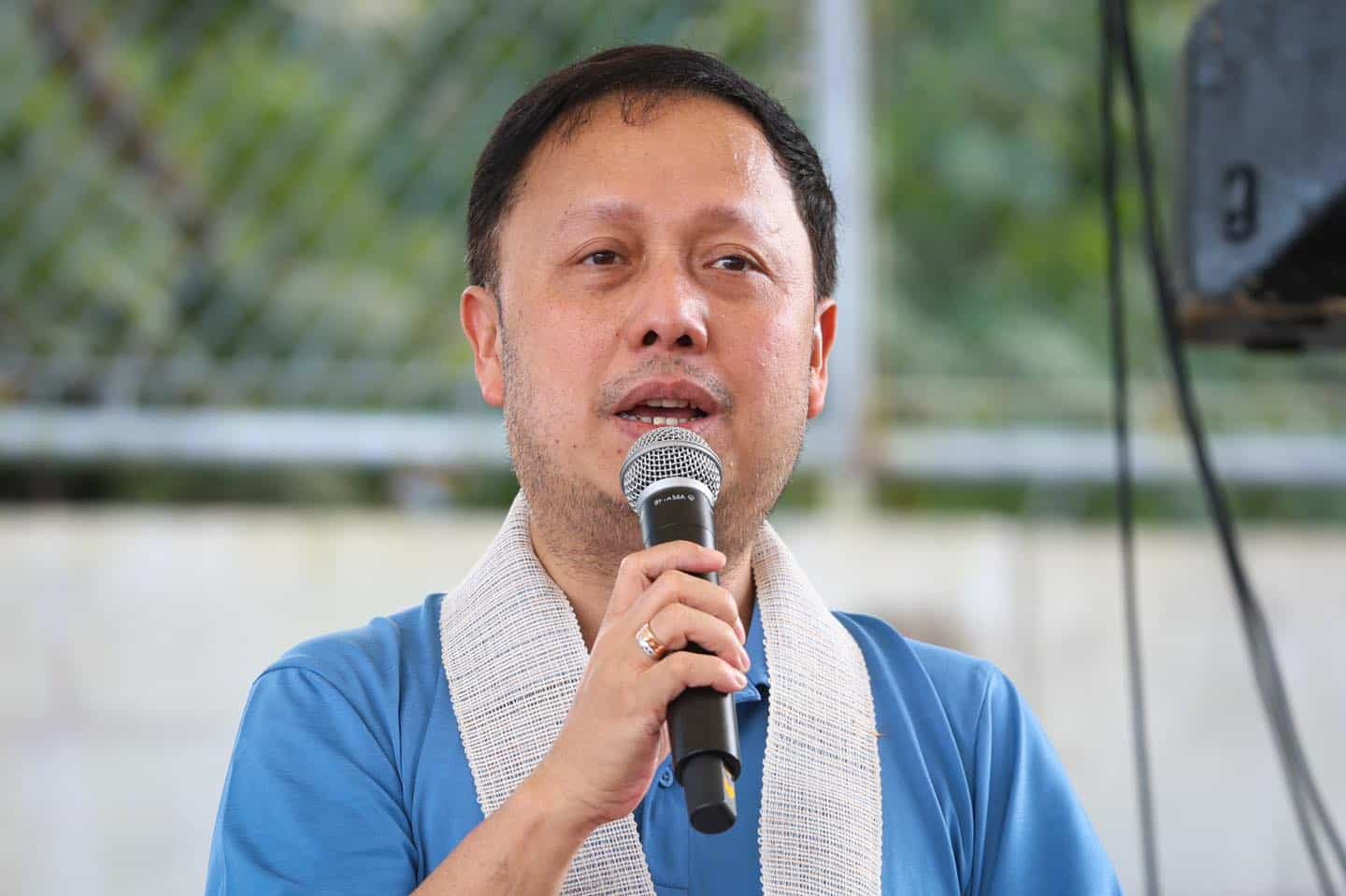
Within a month, DPWH Secretary Manuel Bonoan had resigned and been replaced by Vince Dizon, who was handed a mandate for a "full organizational sweep" (Manila Bulletin). Contractor Sarah Discaya had skipped a Senate summons and been subpoenaed for it (Philstar). The scandal had a face before it had a name.
It got both in September. Sarah and Curlee Discaya, owners of nine construction firms that had been quietly bidding against each other for the same government contracts, sought state-witness status and described a system: officials demanding 10 to 25 percent of contract value, tracked in a ledger, collected in cash, some of it changing hands at a wine bar in Bonifacio Global City (Rappler). Two of the country's most powerful legislative figures fell within the same two weeks. Senate President Francis Escudero was ousted on September 8 after reporting tied his top 2022 campaign donor to an implicated contractor. House Speaker Martin Romualdez, Marcos's own first cousin, resigned the speakership on September 17, and the Department of Justice announced it was investigating him directly by month's end.
On September 11, Marcos signed Executive Order 94, creating the Independent Commission for Infrastructure (ICI): an ad hoc body with subpoena power, the authority to recommend asset freezes and hold-departure orders, and a mandate to report to him monthly, chaired by retired Supreme Court Justice Andres Reyes Jr. (EO 94). Ten days later, on September 21, tens of thousands of people filled Rizal Park and the EDSA Shrine simultaneously in what organizers called the Trillion Peso March, the largest protest of Marcos's presidency, one that ended with over two hundred arrests and one death in clashes in Manila (Wikipedia). The Commission on Audit, meanwhile, was finding the thing everyone suspected but no one had proven on paper: flood walls marked complete in government ledgers that simply were not there. Satellite and site review flagged ₱389 million and then another ₱389.6 million in Bulacan alone as ghost projects that September (Inquirer).
This is the part of the story the country already knows. What matters now is what happened to the confession once it left the podium and entered the docket.
The docket
By November, the first criminal case landed: the Ombudsman charged fugitive former Ako Bicol congressman Zaldy Co, along with seventeen co-respondents, with graft and malversation over a ₱289.5 million ghost project in Naujan, Oriental Mindoro, a project that, like the ones in Bulacan, existed on paper and nowhere else (AP). Co had already left the country by the time the warrant was issued. He is still outside it.
From there the cases kept coming, mostly downward and inward rather than upward. Sarah Discaya was charged in December over a ₱96.5 million ghost project in Davao Occidental and surrendered to the NBI. Former Senator Bong Revilla was charged in January over a ₱92.8–112 million project in Pandi, Bulacan, alongside two DPWH district engineers, and surrendered to authorities. In May, the Ombudsman filed plunder and multiple graft charges against sitting Senator Jinggoy Estrada and former DPWH Secretary Bonoan over more than ₱573 million in alleged kickbacks tied to ₱1.4 billion in Bulacan projects; both posted bail on the graft counts, but once the Sandiganbayan issued warrants on the non-bailable plunder counts, both surrendered: Estrada to a jail in Payatas, Bonoan into custody later converted to hospital confinement for illness. By June, the Palace was publicly defending its record, pointing to two senators facing trial and nine Discaya-linked firms stripped of their contractor's licenses, in response to a "no big fish" charge from protesters who had by then organized a second mass action, the White Ribbon March (Philstar).
Here is the ledger as it stands, thirteen months after the SONA that started it:
| Who | Status, August 2026 |
|---|---|
| Sarah & Curlee Discaya. Contractor couple, nine firms. | Charged; nine firms' licenses revoked |
| Zaldy Co. Ex-congressman, alleged broker. | Charged on one count; arrested in Prague, released, still abroad; core plunder case still in preliminary investigation |
| Sen. Jinggoy Estrada. Sitting senator. | Charged with plunder; detained |
| Bong Revilla. Former senator. | Charged; detained, then granted bail on one case |
| Manuel Bonoan. Former DPWH Secretary. | Charged with plunder; hospital-confined |
| Sen. Francis Escudero. Sitting senator, ousted Senate President. | Hold-departure order; recommended for preliminary investigation; not charged |
| Martin Romualdez. Former House Speaker, Marcos's cousin. | Not charged; named by Ombudsman assessment as alleged recipient of up to ₱56 billion in kickbacks and scheme "mastermind" (Politiko) |
Read down that list and the shape of the year becomes obvious. Consequence lands hardest on the people closest to the pouring of concrete: the contractors, the district engineers, the couple who kept the ledger. It grows lighter, more provisional, more procedural, the closer it gets to the people who allegedly wrote the rules the ledger was following. Revilla, the one former senator who reached actual detention, had secured bail on one of his cases by early August. Romualdez, the one name every witness, every commission report, and the president's own numbers point toward, remained a free man with a hold-departure order and a promise.
That promise came from Marcos himself. On July 27, 2026, delivering his fifth SONA almost exactly one year after his first accusation, he announced nearly ₱25 billion in assets recovered, frozen, or preserved, said "the wheels of justice are turning," and told the country the Ombudsman would soon file "case after case" against his cousin, warning, without naming him directly, that Romualdez "could soon be jailed" (Philstar; SunStar). Rappler's own read of the speech was blunter, calling its treatment of the scandal a "black hole" that highlighted "selective justice" (Rappler).
Two weeks after that speech, the case against Romualdez did not move forward. It moved backward. On August 8, four former bodyguards, described in Philippine reporting by the folk term "bagmen," men who had testified to personally carrying cash on Romualdez's behalf, recanted their statements. The Ombudsman said the recantations bore the fingerprints of "Romualdez's camp" and asked the National Bureau of Investigation to look into it (Philstar). This happened in the same week prosecutors were telling reporters the case was "very close" to filing. Read the two facts side by side and you get the essay's real subject: in this country, right now, evidence against the most powerful suspects has a half-life, and it is short.
The arithmetic
Put a number on it. Nearly ₱25 billion recovered, frozen, or preserved is a real figure, and more than ₱800 million of it has already been returned to the national treasury. It is also, by the government's own reckoning, well under two percent of the roughly ₱1.9 to 2 trillion in flood-control spending now under scrutiny since 2016. That base itself had roughly doubled from the Duterte-era baseline of ₱587 billion to about ₱1.2 trillion under Marcos, even as the scandal was unfolding (Manila Times). The government has not said how much of the ₱25 billion is actually spendable recovery versus assets merely frozen pending a case that, as of this writing, has produced zero convictions. Not one. Thirteen months, dozens of charges, a president's own family implicated, and the conviction count sits at zero.
The World Bank's mid-2026 economic update on the Philippines used a word that rarely appears in multilateral prose: it said the corruption cleanup itself was "spooking investors," a note that the mechanism built to restore confidence is, for now, also a source of the uncertainty it was meant to resolve (Rappler). Marcos's own approval numbers tell the same story from the public's side. By December 2025 his satisfaction rating had fallen to a record 21 percent, down from over 60 percent governance approval a year earlier, even though his personal performance rating had briefly ticked up when the scandal first broke, before the disclosures outpaced the credit he got for making them (Philstar). A Social Weather Stations survey from that same period found "much trust" in the president at 38 percent against a rising 41 percent who trusted him "little." His own vice president and chief political rival, Sara Duterte, saw her trust rating climb to 56 percent over the identical window (Rappler). The scandal did not just cost the government money. It cost the president the story he needed the exposure to tell about himself, and handed a good chunk of that story to the family he is locked in rivalry with. The May 2025 midterms, held just before the scandal's real escalation, had already shown the crack: Marcos's slate took only six of twelve contested Senate seats against five for Duterte-aligned candidates (Straits Times).
The water test
The confession, the commission, the march, the docket, the ₱25 billion: none of it was ever really the point. The point, as we wrote a year ago, was whether the water would stop coming into people's houses. It did not.
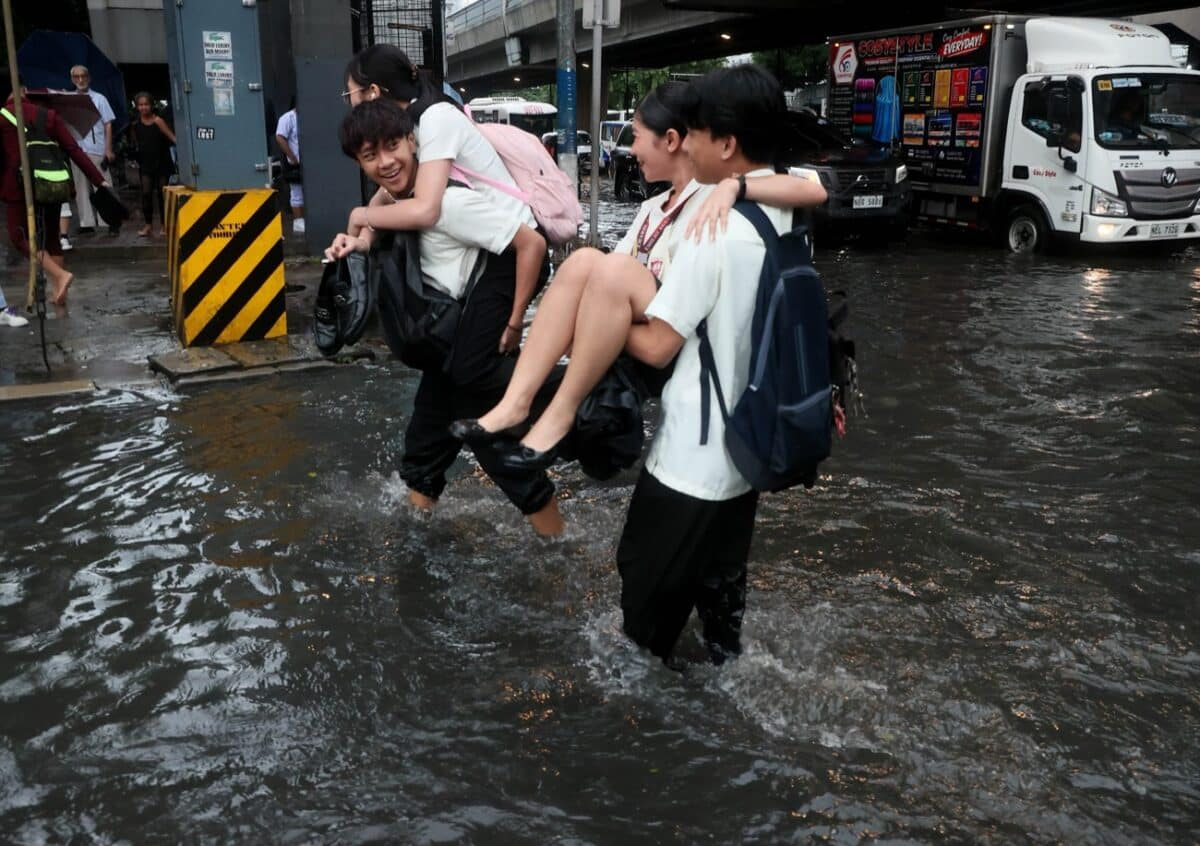
The 2024 baseline this publication cited last year was itself grim: more than 15 million people affected, more than 160 dead, roughly ₱21 billion in damage. The 2025 typhoon season, arriving after the scandal had already broken and while the country was watching the ICI hold hearings on television, was worse by a wide margin. Typhoon Kalmaegi, known locally as Tino, killed at least 253 people in a single storm, nearly double the entire prior year's death toll, with the heaviest losses in Cebu, where CNN's reporting noted flood-control infrastructure that "should have been operational" by the time the storm made landfall simply was not (CNN). Combined with Typhoon Fung-wong two weeks later, the two storms alone produced somewhere between 286 and 322 deaths, worse than the full twelve months of 2024, inside a single fortnight, in a year when the nation had, by its own president's account, finally started telling the truth about why its flood walls kept failing. The 2026 season, through mid-August, has been comparatively lighter: 21 dead, 3.15 million affected across ten regions. Still a real toll, and still, per the government's own disaster office, occurring without any shortage of rescue capacity, which is at least a different failure than last year's (Manila Bulletin).
The ghost projects, once merely alleged, have since been confirmed the hard way: inspectors stood where a flood wall was supposed to be and found nothing. A Sandiganbayan-ordered inspection of the Pandi, Bulacan project tied to Revilla's indictment found no evidence the ₱92.8 million structure had ever existed. A seawall in Camarines Sur, marked complete and fully paid, was found collapsed and washed out. These are not accounting discrepancies. They are the physical absence of things the government told its own citizens, in writing, were there to protect them. A storm eventually finds those absences on its own schedule, with no interest in whether an Ombudsman case has been filed yet.
This is the essay's real image, if it needs one: a country that spent a trillion pesos building ghosts, and is now spending a second year building a prosecution against the same ghosts, a process that produces paperwork with the same property as the flood walls it investigates. It exists on a docket. It has a case number. It has been described, publicly and repeatedly, as complete or nearly so. Whether it is actually there is a separate question, one a different kind of inspector will eventually have to answer.
The part that is real
It would be a disservice to end there, because something in this year is not ghost material. The DPWH now runs a public transparency portal listing 247,172 projects worth ₱6.359 trillion since 2016, searchable by any citizen who wants to flag a wall that isn't where the paperwork says it should be. The department abolished its own toothless internal Anti-Graft Committee, forced courtesy resignations from every senior engineering official, and took a ₱255 billion cut to its proposed 2026 budget in exchange for a shift toward what officials are calling science-based project planning (GMA News). The immigration lookout and asset-freeze machinery the ICI built, coordinated watchlists and AMLC freezes now running past two thousand accounts, did not exist as functioning institutional muscle a year ago. It does now. A House member has already filed a resolution to reopen the chamber's own dormant probe, nine months after it deferred everything to the commission (Inquirer), which suggests the appetite for this has not fully drained out of the legislature either.
These are the reforms of an institution that got caught, not an institution that reformed itself before it had to. But they are also durable in a way indictments are not yet proven to be. A transparency portal does not need a conviction to keep working. A blacklist does not need a plunder verdict to keep a firm out of the next bid. If the flood control system in five years is measurably better, it will very likely be these administrative changes, boring, bureaucratic, hard to put on a protest banner, that did the work, while the marquee cases against the country's most famous names either resolve or, as several already threaten to, quietly do not.
What we said then, and what we know now
Last year's piece argued that the flood control crisis was never fundamentally about the size of the budget. It was about governance, accountability, and whether the money that got spent actually turned into concrete that held back water. Twelve months of confession, commission, and courtroom have not overturned that argument. They have specified it. The country now knows, in a level of granular, sworn, cross-examined detail unavailable a year ago, exactly how the money moved: the percentage cut, the wine bar, the ledger, the district engineers who signed off on walls that were never poured. It knows the names of the people closest to the money, and most of those people are now in some stage of legal jeopardy that ranges from stripped licenses to actual jail cells.
What it does not yet know, and what nobody outside a small circle of Ombudsman prosecutors and, evidently, several recently unpersuaded bodyguards actually knows, is whether the name at the top of nearly every witness's account will ever face a verdict, or whether the case against him will keep doing what the concrete did: exist on paper, get photographed for the record, and quietly fail to hold when the water actually comes.
The time for accountability, we wrote a year ago, is now. A year later, the honest amendment is smaller and harder to write: accountability arrived, on schedule, for everyone except the people it was supposed to be a test of.
This is the second installment in an ongoing Oblique series tracking the Philippines' flood control accountability crisis. Read the original investigation here.