
How Cross-Border Payouts Trap Working Capital
A payout corridor is a balance sheet before it is a payment rail. Prefunding, buffers, and settlement calendars decide how much cash a company immobilizes to pay reliably, and who carries it.

A payout corridor is a balance sheet before it is a payment rail. Prefunding, buffers, and settlement calendars decide how much cash a company immobilizes to pay reliably, and who carries it.

Stablecoins can make the cross-border settlement leg faster and more programmable, while USD funding, FX conversion, PHP liquidity, compliance, local payout, and beneficiary-account credit remain essential parts of delivering money across borders.

Alipay+ just connected to QR Ph, giving 2.5 million Philippine merchants access to cross-border wallet payments through the QR codes they already use.
Why a cross-border payout can take days: the hidden work of funding, FX, correspondent banks, local rails, reconciliation, and exceptions.

The real opportunity is not a new financial universe; it is a better settlement layer between familiar fiat endpoints—one that reduces the exception tax of cross-border payments: delays, FX leakage, prefunding, reconciliation, and capital trapped in transit.

A close read of the AI-slop backlash data shows most of what marketing leaders are being told to do about it outruns the evidence — except one part.

A second look at the ₱556 billion question: what changed when the accountability we asked for actually arrived.
BSP's own FAQ says the QR Ph rebrand changed nothing technical. Most of the coverage said the opposite. Here is what actually changed, and what it means depending on whether you collect payments or build the rails.
After eFishery, Southeast Asian investors underwrite governance before growth. A founder's checklist by funding stage for raising in 2026.
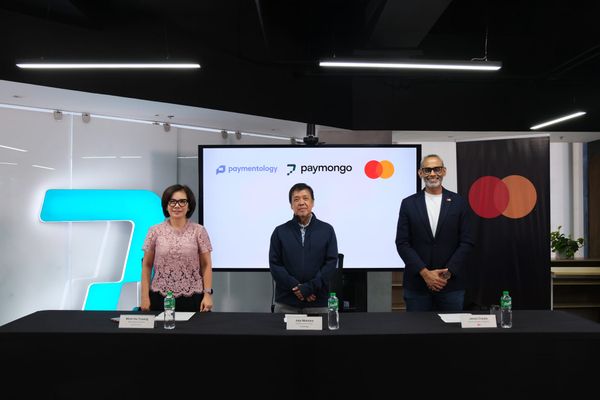
Mastercard, PayMongo, and Paymentology launch a Virtual Prepaid Card with business functions, giving Filipino SMEs instant access to spend management tools without a bank account.

Wallet, card, checkout, or passthrough capital — your first financial product is determined by how deep your customer relationship is and who controls the payment data today.

Grab is still only at 9% financial-services revenue, but the pattern across Sea, GoTo, and Maya is clear: once the audience is built, the wallet line is the one that quietly takes over the P&L.

Essay
Enterprise AI’s $20 seats are not a bargain but a temporary subsidy that will snap back into usage-based bills big enough to shock any company that built core workflows on fake prices.

Embedded Finance
Embedded finance is not a future adjacency for software companies; it is a second revenue line unlocked the moment you have weekly engagement, money flowing through your product, and user trust to hold a balance.

Design
The new AI design tools are very good at producing form, and very bad at the part that actually matters in fintech.
Southeast Asia
Southeast Asia's scam economy is a digital infrastructure problem — and it matters for every founder building on the region's financial rails.

Essay
The Philippines built a $40 billion IT services industry — and almost none of the ownership. AI is about to expose that gap.

Essay
Vanity metrics die fast when your CFO demands grounded unit economics. Tonik's Wanda Pascua on building a revenue-first marketing org in a low-trust market.

Essay
This article is based on a conversation with Niña Terol Aquino, CEO and Co-Founder of FoundHer, and the gap that's costing the Philippines one of its biggest economic opportunities.

Ecosystem
Indonesia’s startup boom didn’t just stall — it got repriced, as the eFishery and TaniHub scandals turned “growth at all costs” into a permanent trust tax on every Indonesian founder raising capital.

Ecosystem
The Philippines’ startup problem is not talent, funding, or ambition—it is exit arithmetic. When capital markets cannot absorb high-growth companies, venture outcomes collapse regardless of founder quality or capital deployed.

Digest
January clarified the rules of participation in Southeast Asia’s tech ecosystem. Capital, exits, and AI deployment now reward preparedness, positioning, and institutional alignment.

Funding
For anyone building in SEA over the next 24 months: incorporate in Singapore and engineer unit economics for 12-month payback, or accept that institutional venture capital is structurally unavailable.
Essay
Founders in Southeast Asia know the math of dilution, but the ecosystem’s incentives push them to behave as if the math doesn’t matter.